Car accident help in Glendale & Burbank
Glendale and Burbank sit where four freeways meet, and the traffic shows it. If you've been in a crash anywhere from Brand Boulevard to the Burbank airport, one call to us gets you an attorney, a tow, a body shop, and rental car help, free to you.
Who responds, and where your report comes from
- City streets in Glendale: the Glendale Police Department.
- City streets in Burbank: the Burbank Police Department.
- Freeways (the 5, 134, 2, and 210): the California Highway Patrol (CHP).
Ask the officer for the report number before you leave. You'll request the report later from whichever agency responded, and your attorney and insurer will both want it.
Freeways and corridors we hear about
The interchanges where the 5, 134, and 2 meet, the 210 through La Cañada and Sunland, and busy surface streets like Glendale Avenue, Brand Boulevard, Olive Avenue, and Victory Boulevard. Freeway crashes often mean a tow from a shoulder or a center divider. Don't stand between cars on the freeway; wait somewhere safe for CHP.
What we can arrange near you
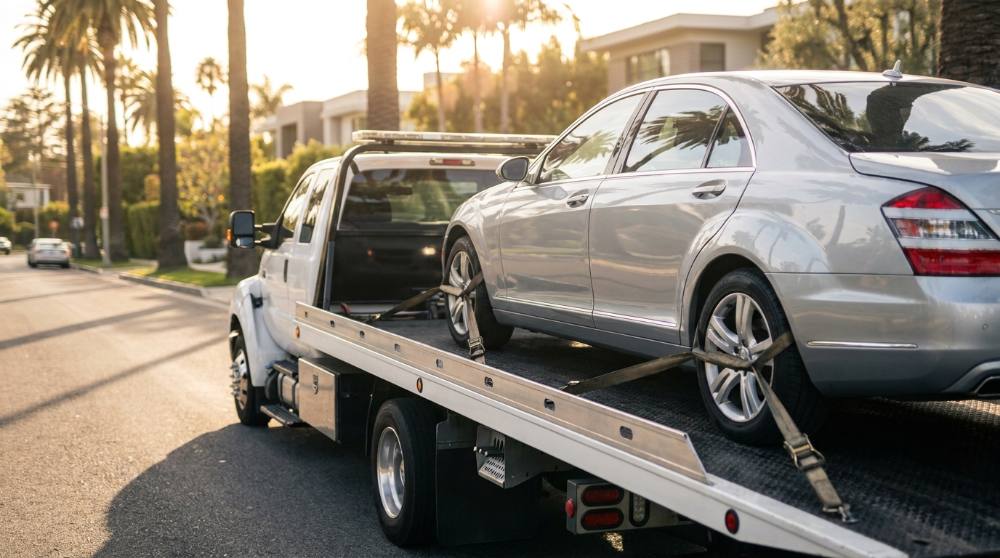
- A tow to a body shop you choose, or one we've checked nearby.
- An introduction to a licensed, independent accident attorney. Your attorney can also refer you to doctors who treat accident injuries.
- Help with a rental car, often covered by insurance.
Neighborhoods we serve
Downtown Glendale, Adams Hill, Montrose, La Crescenta, Downtown Burbank, the Media District, Magnolia Park, Sun Valley, and the surrounding area.